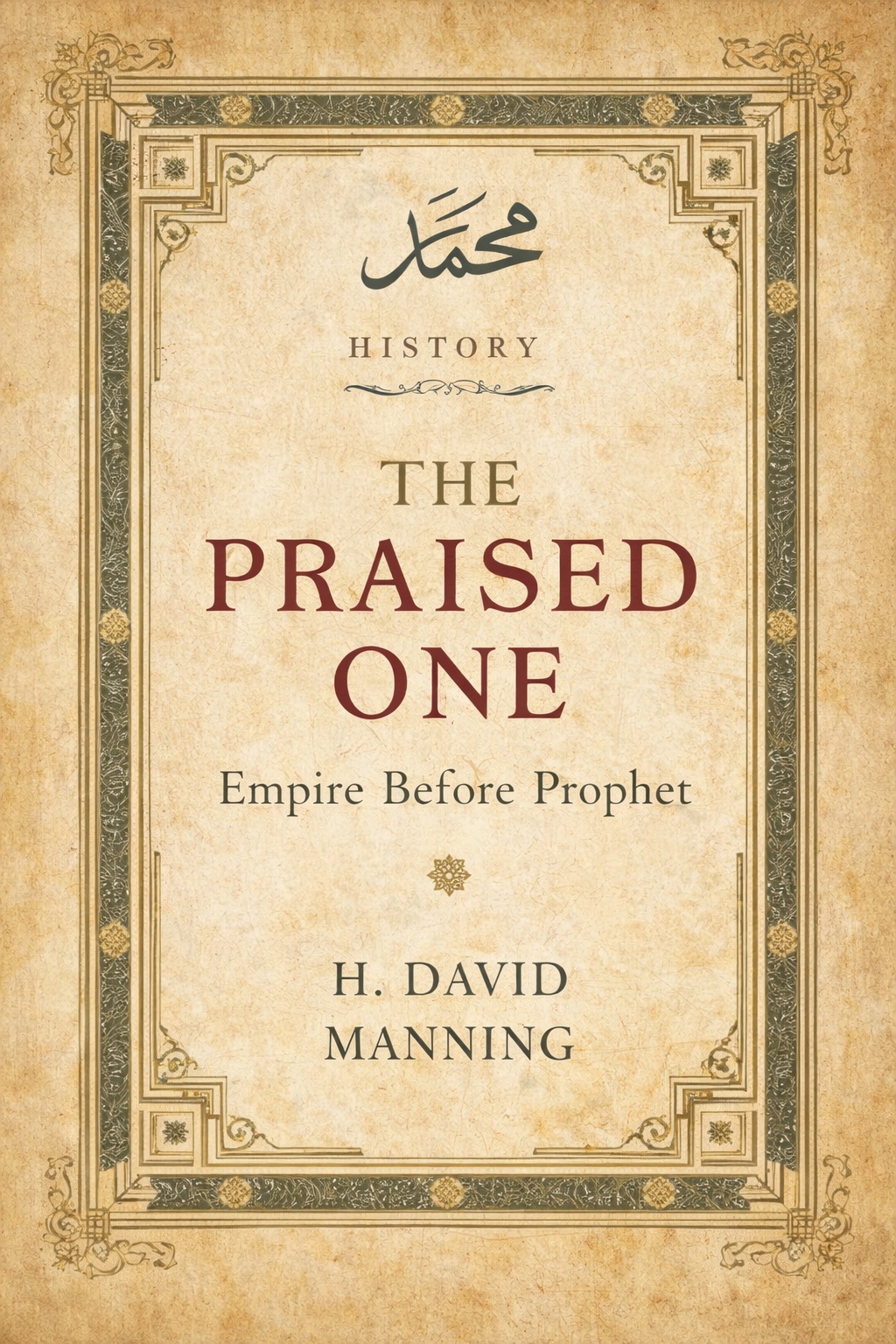
Empire Before Prophet
What if the standard story of Islam's origins doesn't match the physical evidence? This book follows the archaeology, the coins, the inscriptions, and the manuscripts that the traditional narrative left behind.
For more than a century, the origins of Islam have been treated as settled history. But the physical record tells a different story. Coins minted by the earliest Arab rulers carry no mention of Muhammad. The oldest mosques don't face Mecca. And the Quran itself contains hundreds of words borrowed from Syriac, the liturgical language of Near Eastern Christianity.
The Praised One is not a polemic. It is a journalist's investigation. It lays out the material evidence, identifies where the traditional narrative diverges from that evidence, and asks the reader to weigh both.
The traditional account of Islam's founding comes almost entirely from sources written 150 to 250 years after the events they describe. That gap would raise serious questions in any other field of historical inquiry. In this one, it has been largely ignored.
The Praised One: Empire Before Prophet does not accept that silence. Drawing on numismatic evidence, archaeological surveys, Quranic linguistics, and the work of revisionist scholars who have spent decades assembling an alternative evidentiary record, this book asks a straightforward question: does the material evidence support the story we have been told?
The answer, examined chapter by chapter, is that it does not. Not because the evidence is ambiguous, but because it points consistently in a direction the traditional narrative cannot accommodate.
This book builds its case on material evidence that can be examined, photographed, and dated. Not traditions written two centuries after the fact.
The earliest qibla walls, rock inscriptions, and building dedications point not toward Mecca but toward Petra. The physical footprint of early Islam doesn't match the story told about it.
For decades after the Arab conquests, coins and administrative documents make no mention of Muhammad as a prophet. The theological vocabulary appears gradually, not all at once.
The Quran is saturated with Syriac loanwords and theological concepts drawn from Christian and Jewish liturgy. The text makes far more sense when read against the religious landscape of the Levant.
Every book is shaped as much by what the author leaves out as by what goes in. Here are some of the threads that informed the investigation but didn't fit within the final manuscript.
The Sira, the traditional biography of Muhammad, is built around a narrative of military conquest and political consolidation. A broader and sharper analysis of this text raises uncomfortable questions about how much of it reflects actual history and how much was constructed to justify imperial expansion after the fact.
The fractures within Islam are usually explained as disputes over succession. But the divisions between Sunni, Shia, and Sufi traditions run deeper than politics. The reasons behind the divide deserve an investigation of their own, one the first book could only gesture toward.
Islam's debt to Judaism extends far beyond the Torah. The Midrash, the vast body of Jewish biblical commentary, left deep marks on the Quran's narratives, its theological arguments, and its rhetorical style. Tracing those connections in full would have been a book within the book.
The Praised One is currently in editorial review. Early readers have shared their responses below. This section will grow as the book reaches a wider audience.
Your endorsement or reader quote will appear here. This is a placeholder for early feedback as it becomes available.
Reader NameTitle or affiliation
Another reader endorsement will be placed here. Compelling quotes about the book's research, readability, or impact work best in this format.
Reader NameTitle or affiliation
A third quote can highlight a different aspect of the book, such as its journalistic rigor, the strength of its evidence, or its accessibility to non-specialists.
Reader NameTitle or affiliation
A fourth quote rounds out the section. Consider including perspectives from different audiences: scholars, journalists, pastors, or general readers.
Reader NameTitle or affiliation
1993
Time spent in Saudi Arabia raises the first questions. The disconnect between what he observed and what the historical sources claimed set the trajectory for decades of study.
1990s – 2000s
Deep reading into revisionist scholarship: Patricia Crone, Michael Cook, Yehuda Nevo, and others who first questioned the standard Islamic origins narrative using material evidence.
2010s
Engagement with Dan Gibson's qibla research, Christoph Luxenberg's Syriac analysis, and Karl-Heinz Ohlig's work on early Arab Christianity. The pieces begin to form a coherent alternative picture.
2020s
The manuscript takes shape. Thirty years of research, organized through an investigative journalist's framework, becomes The Praised One: Empire Before Prophet.
The Praised One opened the case. But the evidence doesn't stop at one book. The research that didn't fit into the first volume, combined with new lines of inquiry, is already shaping the next project.
Follow along for new research, early excerpts, publication announcements, and updates on upcoming projects. No spam. Just evidence.
Get essays, research updates, and the launch announcement delivered to your inbox.
Essays, research notes, and book updates. The primary channel for new content.
Read on Substack →Follow for discussion, links, and community conversation about the book and its research.
Follow on Facebook →Coming soon. Subscribe on Substack for the announcement when the handle goes live.
Coming SoonHave a question, media inquiry, or want to share feedback on the book? Send a message below.
This form will need to be connected to an email service (such as Formspree or Netlify Forms) once the site is deployed. For now it demonstrates the layout.